Repairing a ZX Spectrum Issue 4S
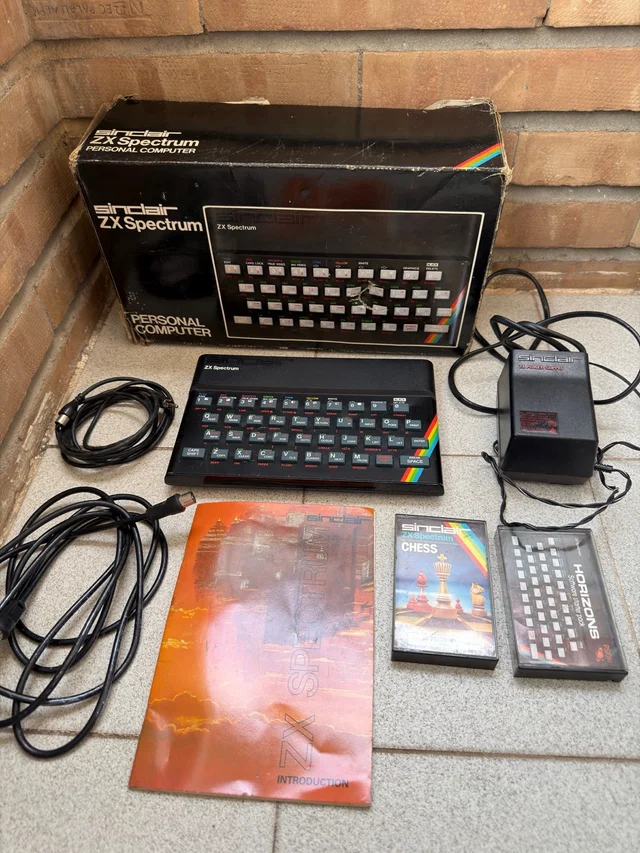
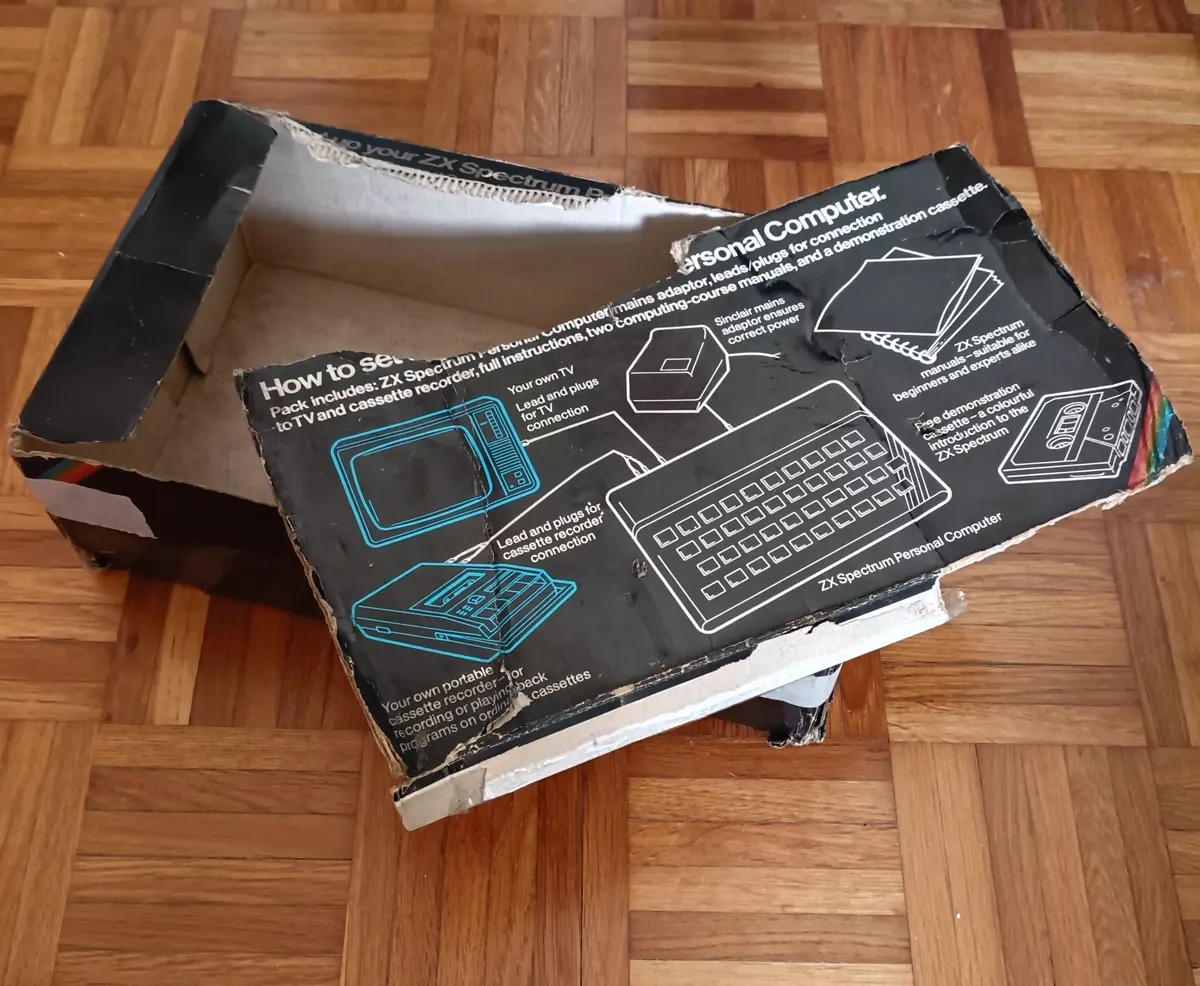
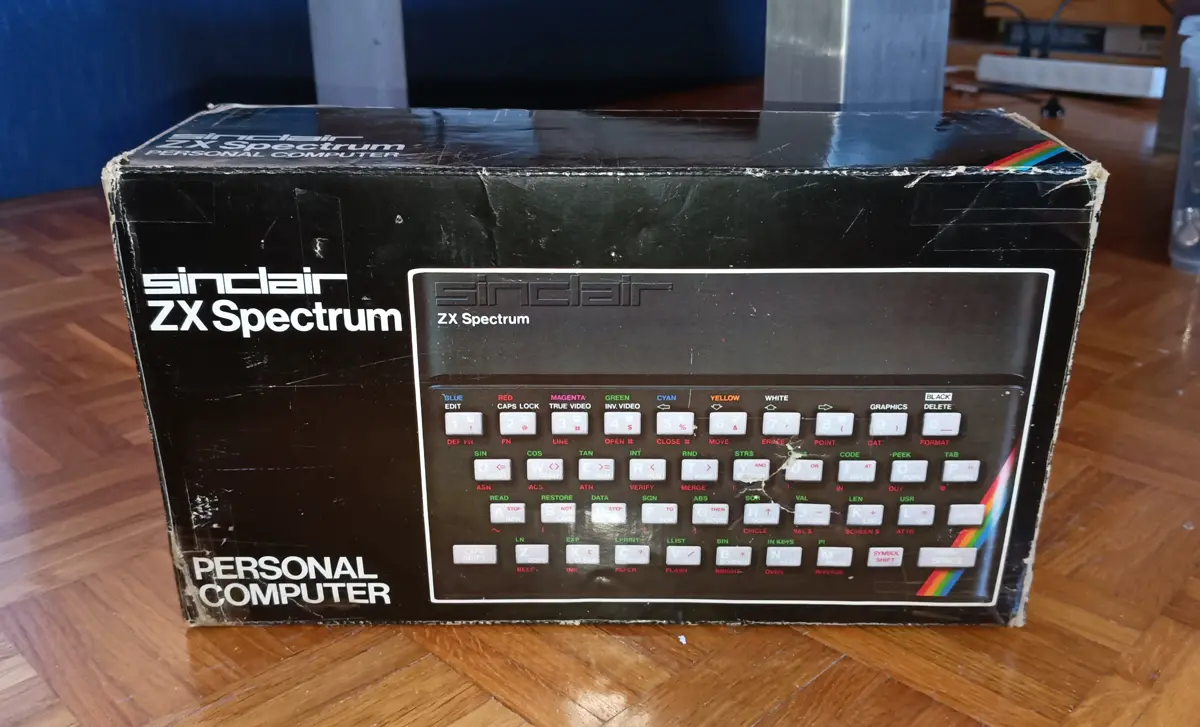
My not first and not last ZX Spectrum: we are talking about a 48k Issue 4S (Made in Korea), complete with original packaging (lacking internal polystyrene and in not so great condition), power supply and various accessories.
It was sold to me as UNTESTED, and as we know, that very likely means it's broken.
The price was interesting anyway, so I decided to buy it. Besides, I kind of hoped it wouldn't work, since I really enjoy repairing these old computers.
The power supply plug had been cut off, a great excuse to claim it couldn't be tested.
As expected, it didn't work, and in this article, we will see what I did to bring it back to life.
Inspecting it internally, I realized that the keyboard membrane was still perfectly intact, because it is made of a much more elastic and resistant plastic than the rigid, crack-prone membranes of the Made in UK Spectrums. I can safely say that for this reason alone, Korean Spectrums are significantly better than the British ones. The PCB quality is in line with the productions of the era; in fact, this specimen should date back to 1984.
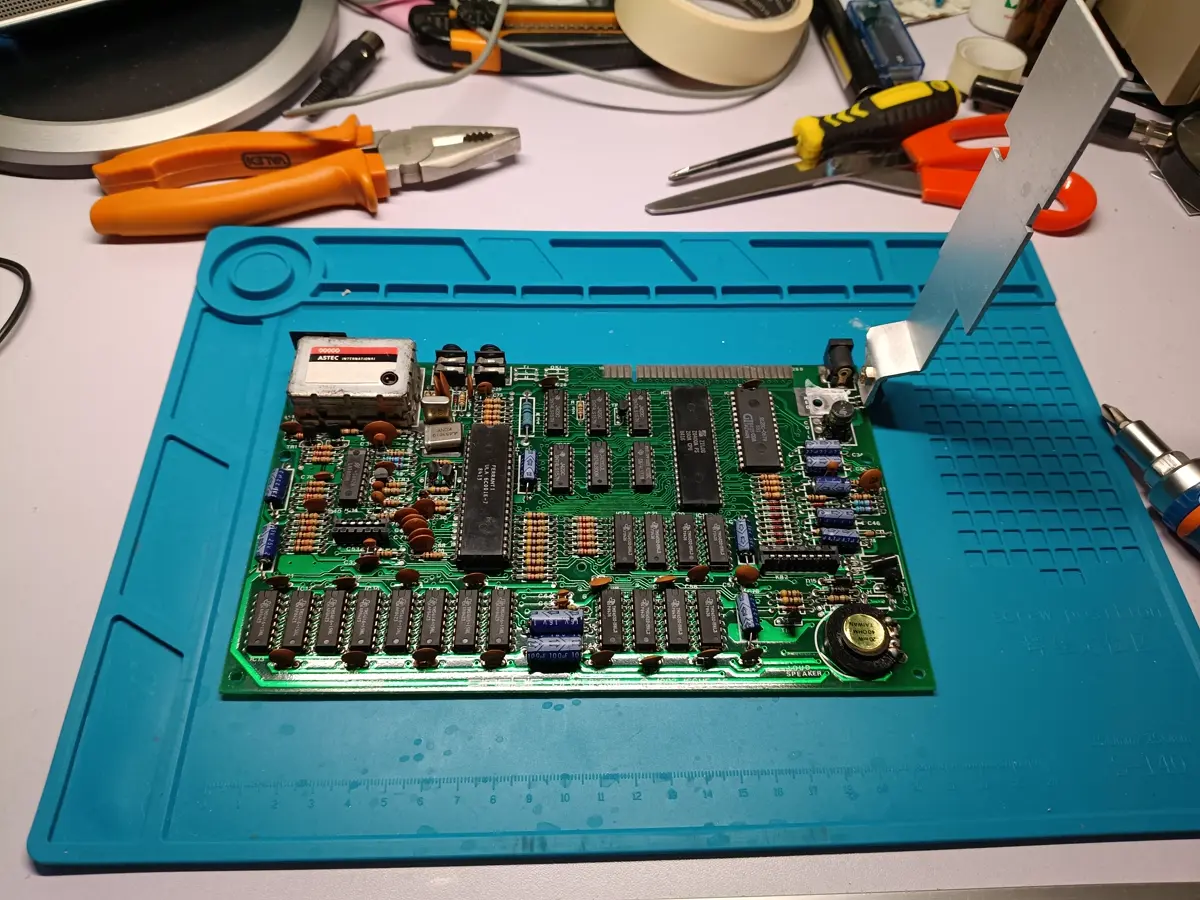
Here is the PCB in all its glory.
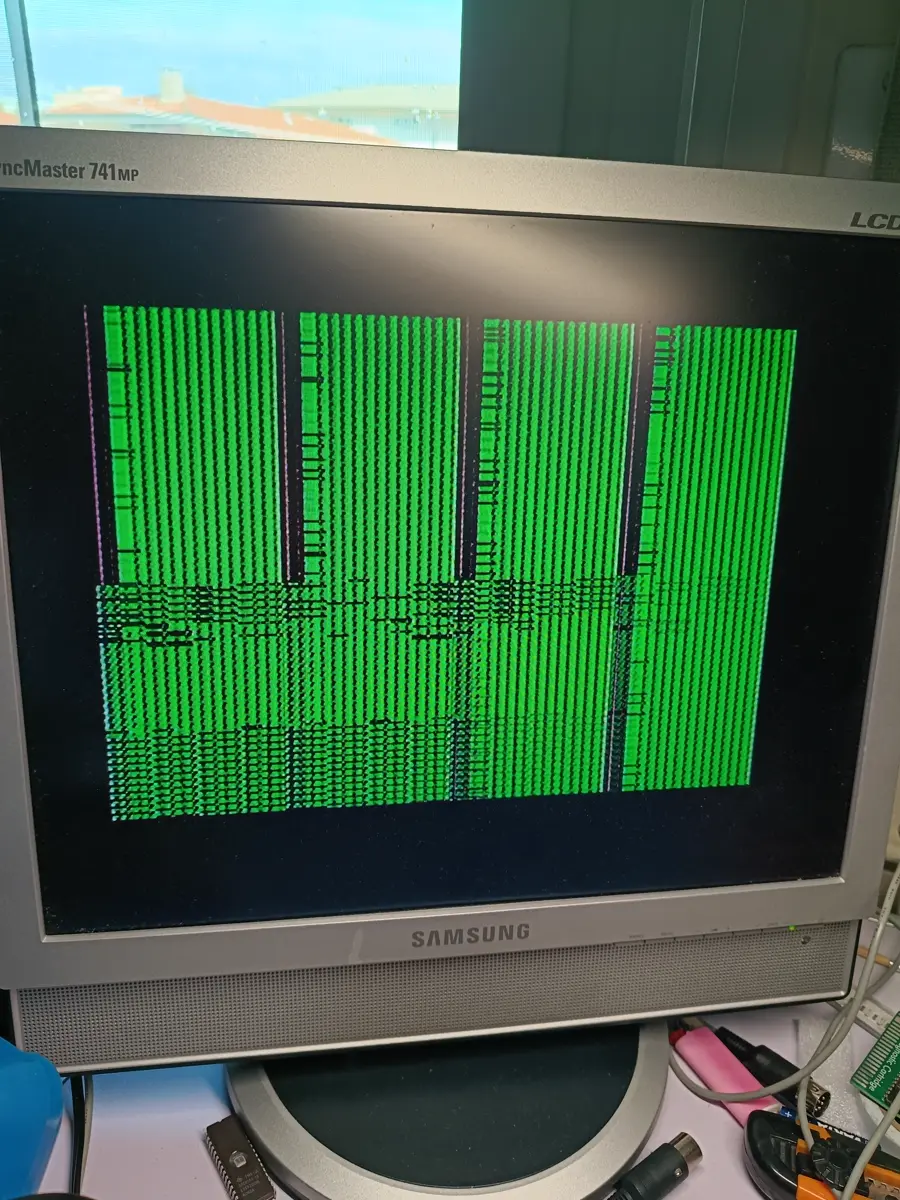 Upon powering it on, it showed this pattern on the screen, but it seemed stable.
Unfortunately, after a few minutes, the screen turned black and I smelled something burning.
It turned out that a damn 4116 RAM chip had shorted on the 12V input, also burning out transistor TR4, a C2236A, which is precisely the one responsible for generating the 12V output. The 4116s are nasty beasts; they require 3 different voltages to function (+5V, -5V, +12V) and run very hot, making them prone to failure.
Over the years, I have collected quite a bit of salvaged components, but I simply don’t have any 4116s.
Therefore, I opted for a more drastic solution: I decided to replace them all with the much more reliable 4164s. I have dozens of these, both new and salvaged from dead Commodore 64s. After desoldering all the 4116s, it turned out that several others had a non infinite resistance between the 12V line and ground, so it would have been only a matter of time before they failed permanently. The 4164s are the best choice since they only require +5V, don’t run hot, and are less prone to breaking down.
For TR4, I didn’t have a C2236A available, nor any of the equivalents listed on official schematics and online, such as the ZTX650. However, among my salvaged parts, I had several power NPN transistors, and I managed to find a 2SC1226A which proved perfect for the job. Sure, it’s bigger than the previous one, but I managed to fit it onto the board without any issues.
To mount the 4164s, it was necessary to perform a small destructive modification on the circuit: cutting the traces supplying 12V and -5V to the RAM chips.
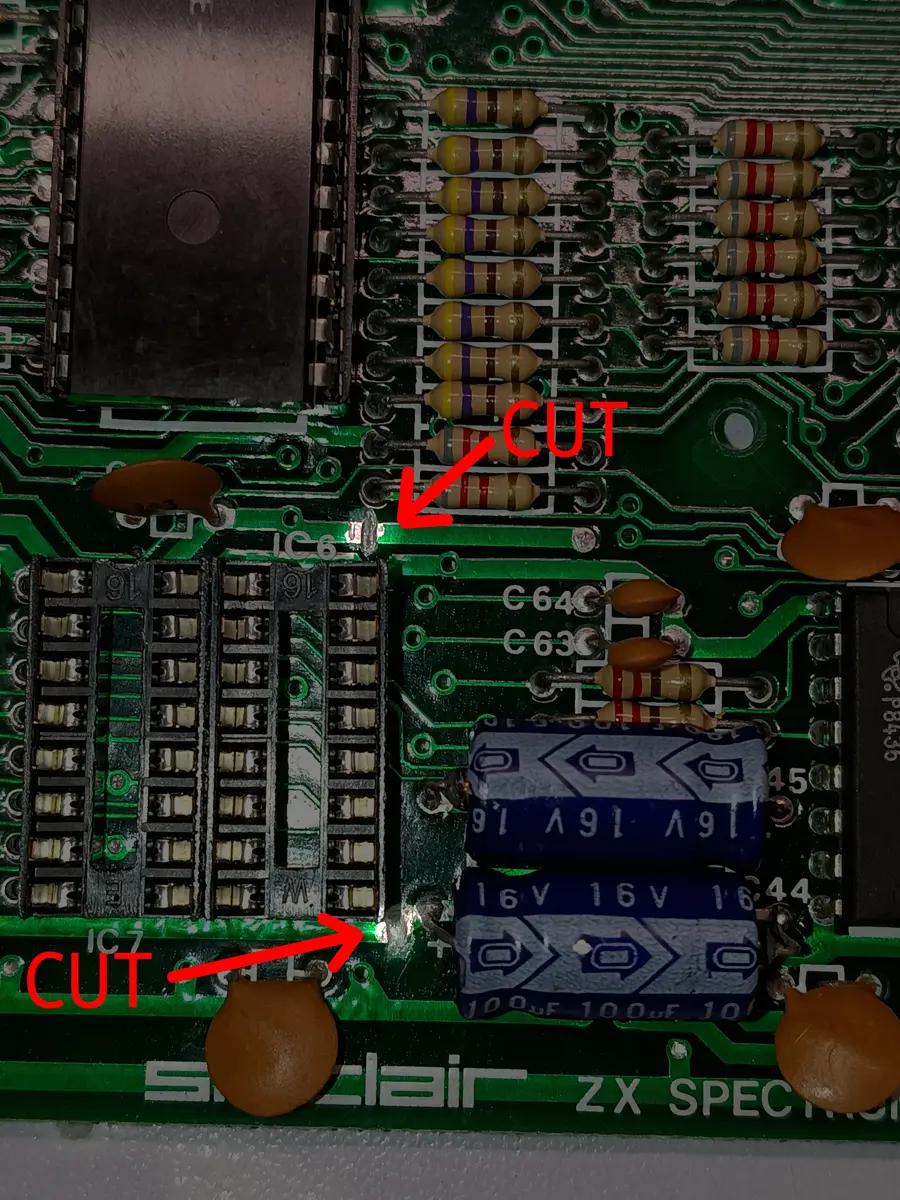
The top trace cut corresponds to -5V, while the bottom one corresponds to +12V. This doesn’t rule out both voltages on other points of the board, but only in the RAM section. The +12V line in particular is important as it powers the integrated LM1889 modulator. Both voltages are still present on the Spectrum’s expansion port anyway.
I didn’t use adapters to mount the 4164s, as the modification was very simple: it was enough to tie pins 8 and 9 of all RAM chips together (the bottom ones), and pins 1 and 16 on the first RAM chip (the top ones).
Pin 9 already had +5V present, so by connecting it to pin 8 I brought it where the 4164s needed it. Pin 9 can safely remain at +5V (logic level 1). Connecting pins 1 and 16 was probably unnecessary since pin 1 is unused on 4164s, but I preferred to make this connection anyway to ground it.
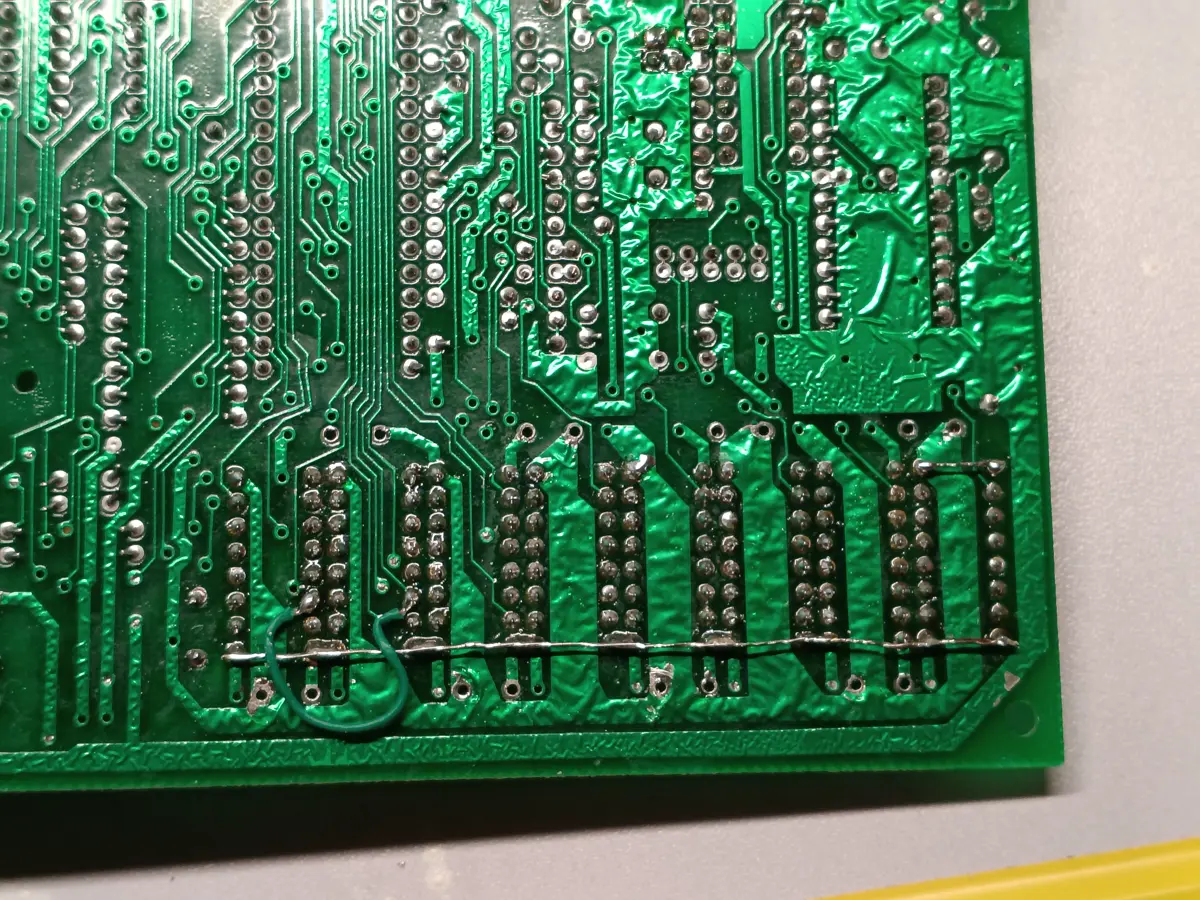
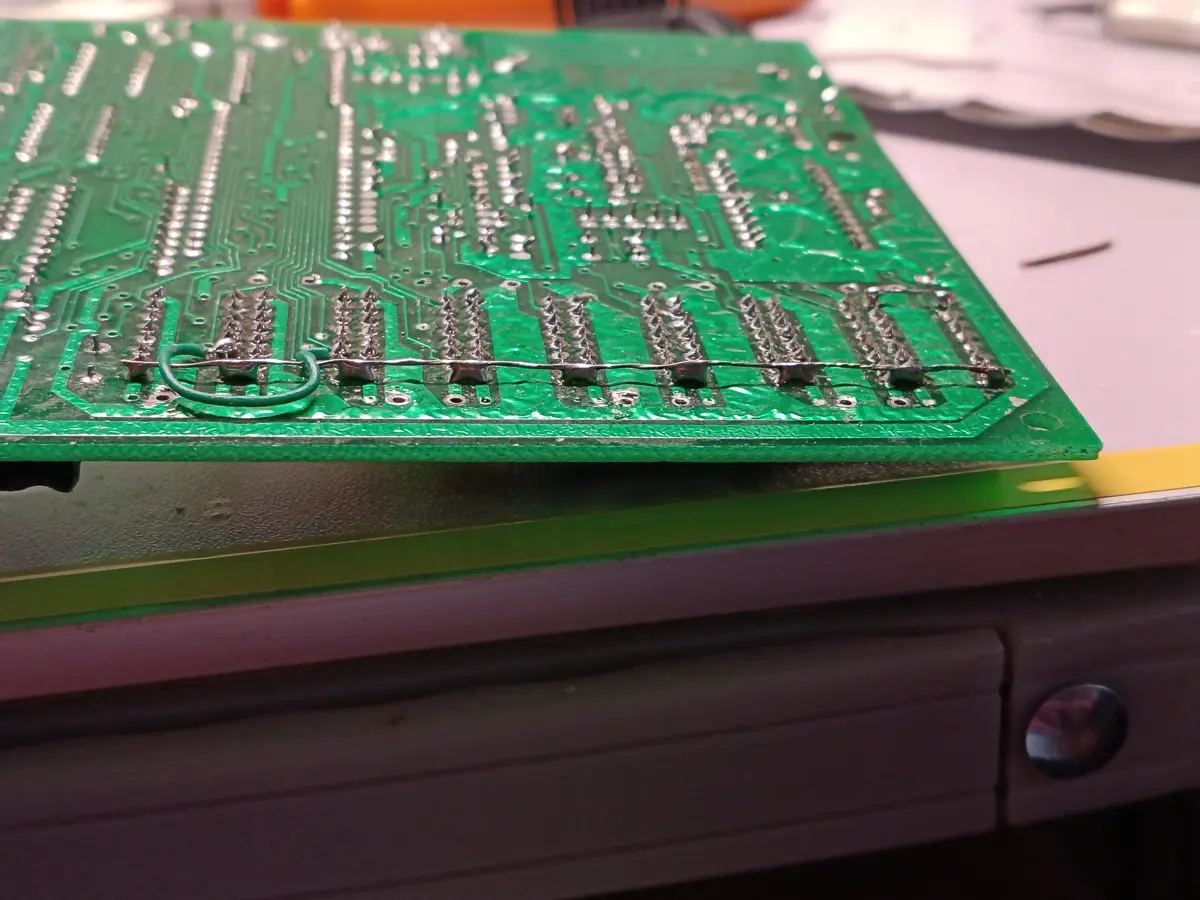
The connection you see between pin 3 of the last 2 RAM chips had to be made because in the heat of desoldering the RAMs, I lifted that trace on the PCB. It happens, my fault!
After installing all the 4164s, the computer booted up! The text “© 1982 Sinclair Research Ltd” was visible, but with a black border instead of white. Furthermore, the keyboard wasn’t working, so there had to be another problem elsewhere.
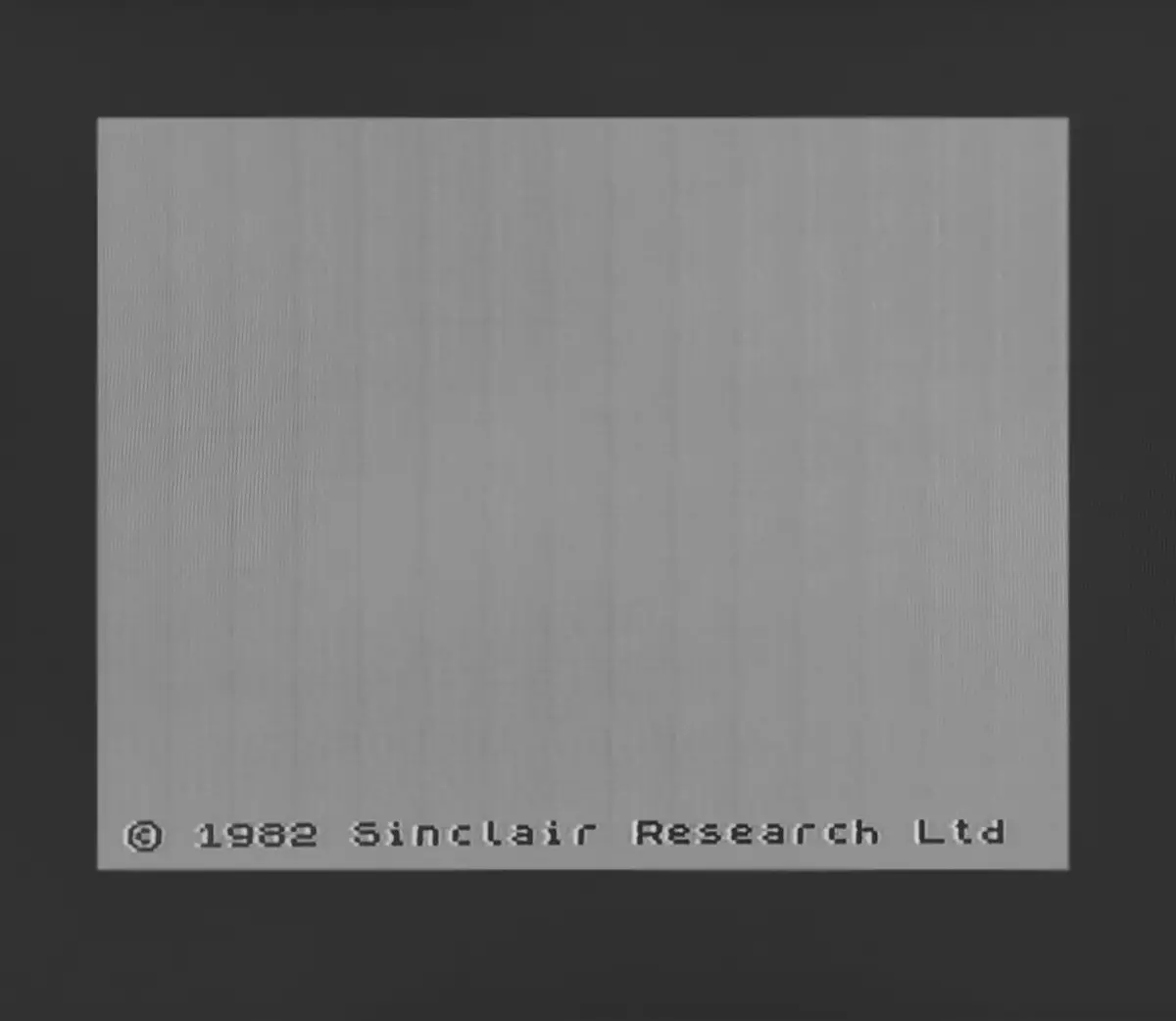 Unfortunately I forgot to take a picture, but it was something like this.
In this case, the suspects were: IC3, IC4 (both LS157 multiplexers), ROM, CPU, ULA.
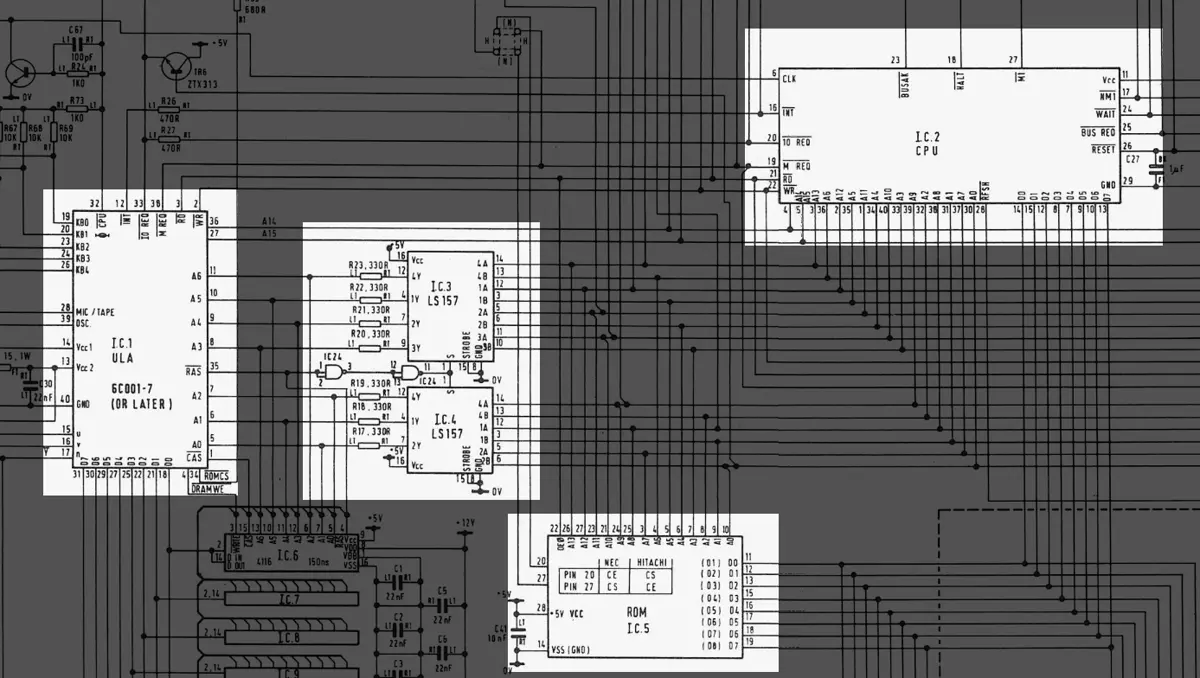
The ULA is a Sinclair custom chip, the heart of the Spectrum, managing almost all of its logic. The only way to test its functionality is to plug it into another Spectrum, and so I did. I inserted it into another Spectrum that I knew for sure was working and verified that it operated correctly.
Next, I moved on to checking the LS157 multiplexers. I desoldered all of them, including IC25/26 which manage the 32k upper RAM. I tested all of them using the XGecu T48 programmer, which has a convenient logic chip test function, and they all turned out to be working properly.
Then I moved on to the ROM. This is a 23128, and modern EPROM programmers don’t support it directly, but you can still read it as a 27128 with a little trick: just lift pin 27 so it doesn’t enter the adapter, and connect it with a wire to pin 14 to tie it to ground.
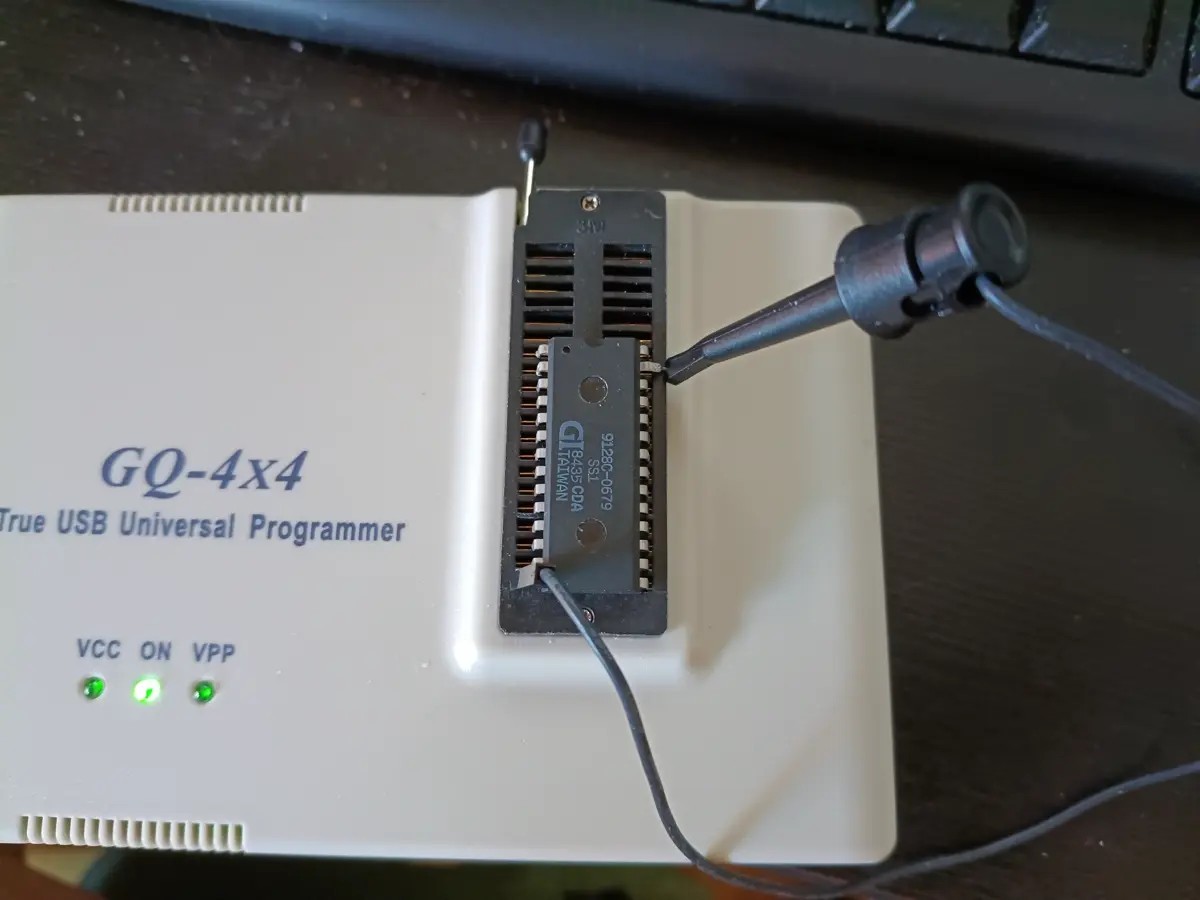
Comparing the read bytes with the file circulating online, there was a 100% match, so the ROM was also perfect.
Last step: the CPU. Strangely enough, the machine booted, so the CPU was at least partially functional. Among my salvaged items I have a board from what I presume was an old Olivetti cash register, which contains an identical Z80 CPU to the one found in the Spectrum. Not an original 1984 Zilog, but an ST from 1989, I’d say that works just as well.
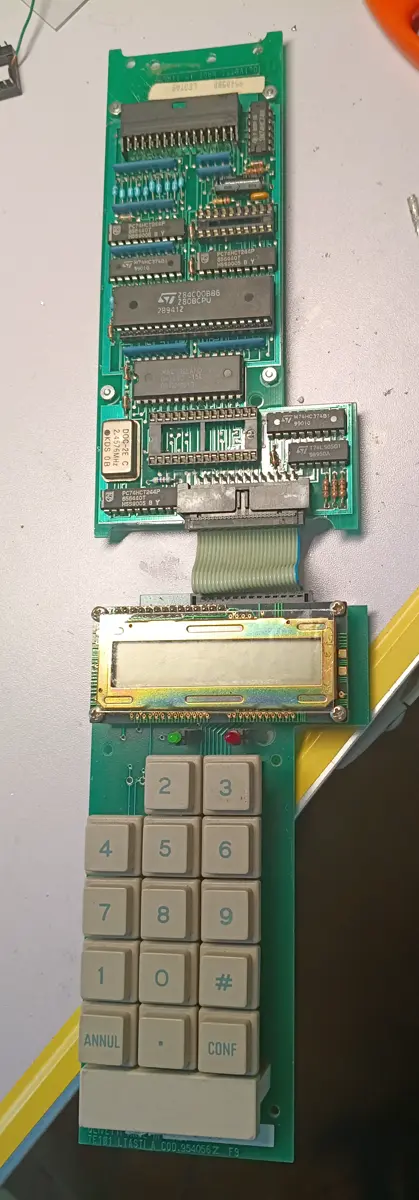
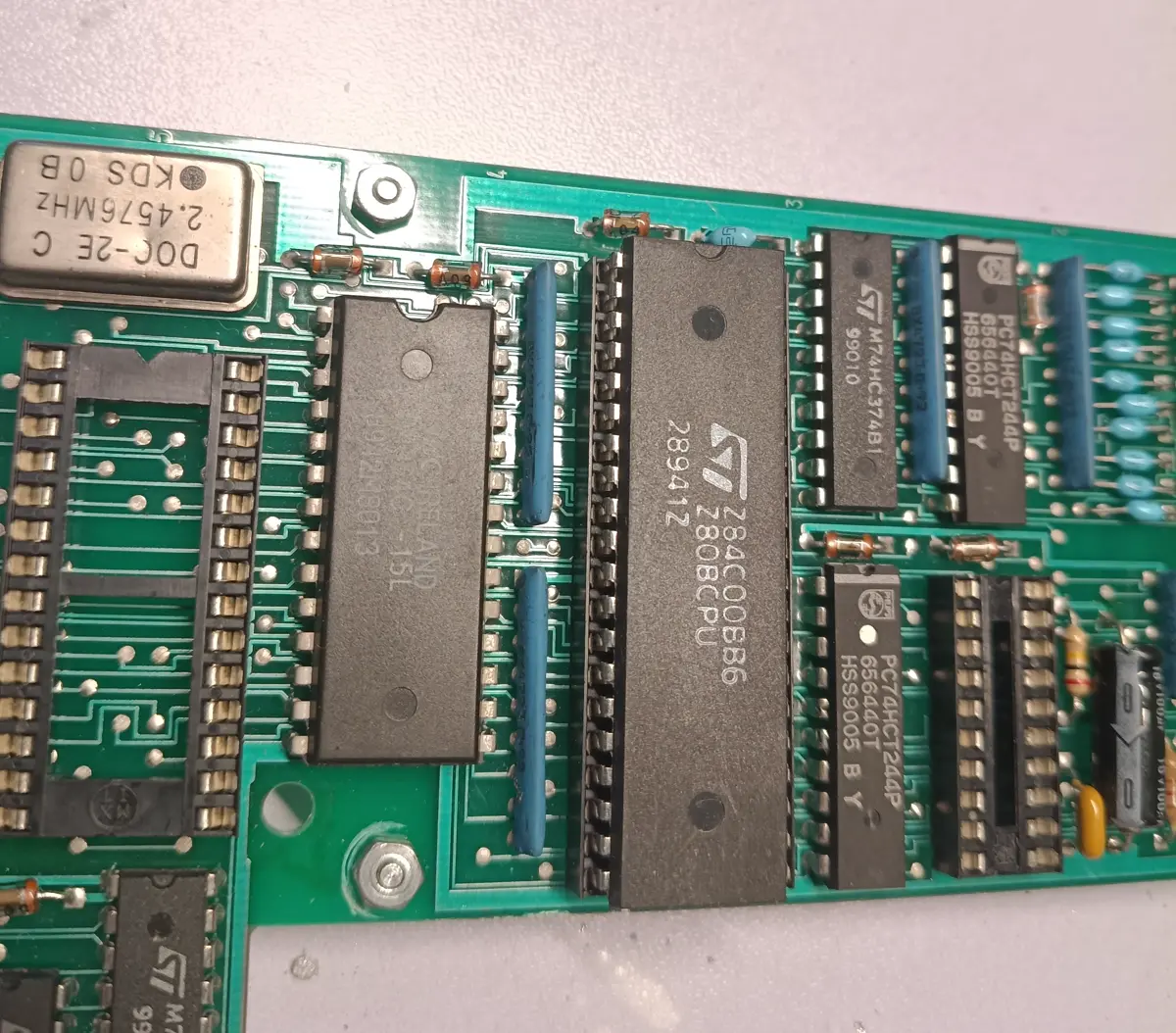
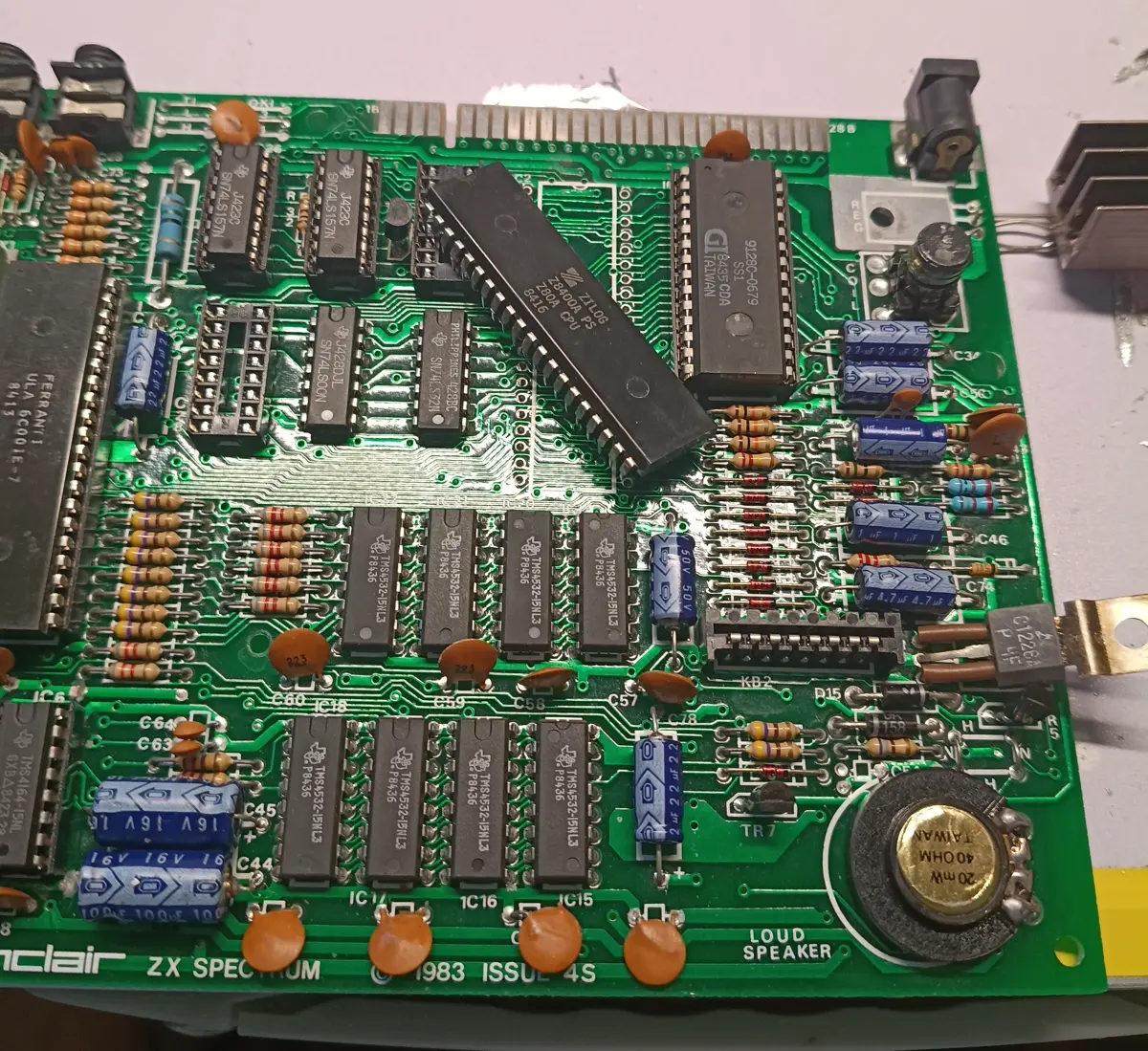 So I performed the transplant.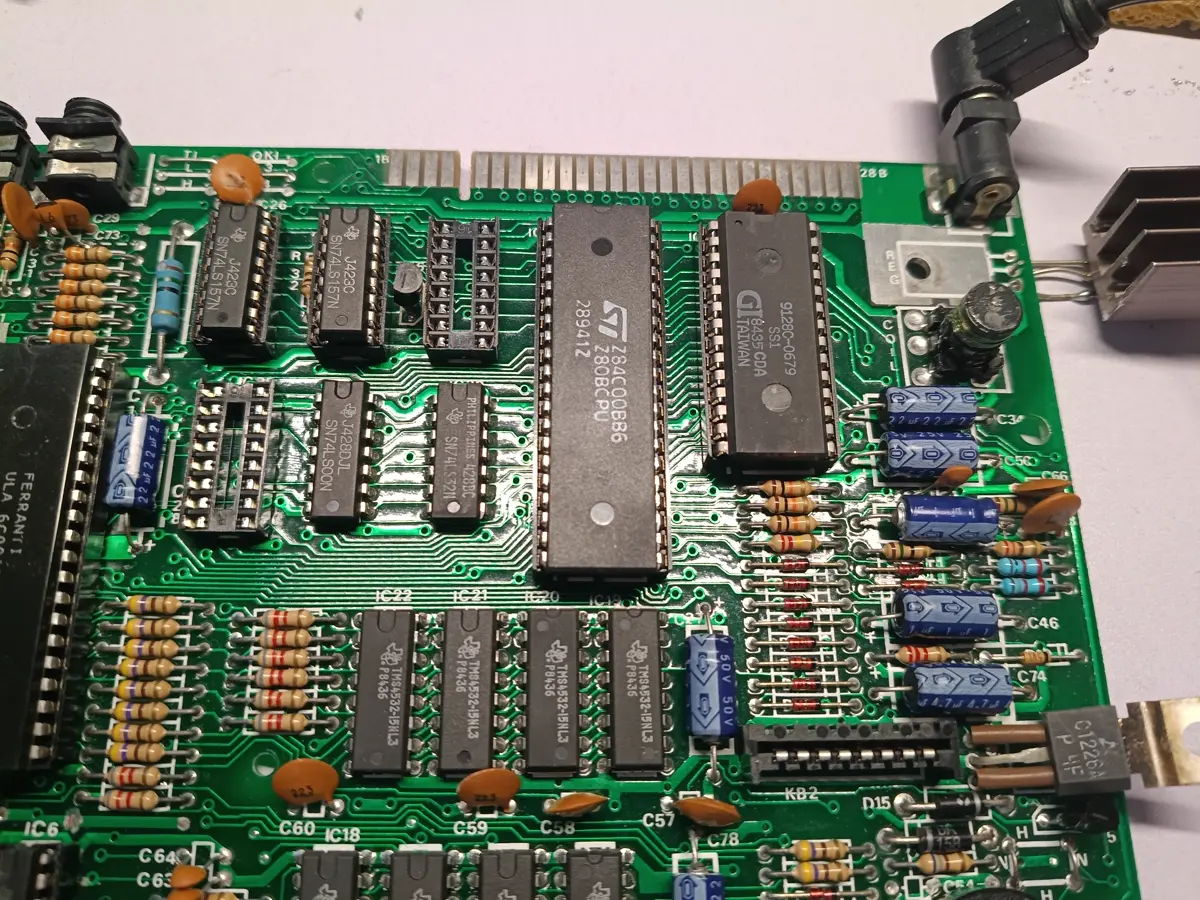
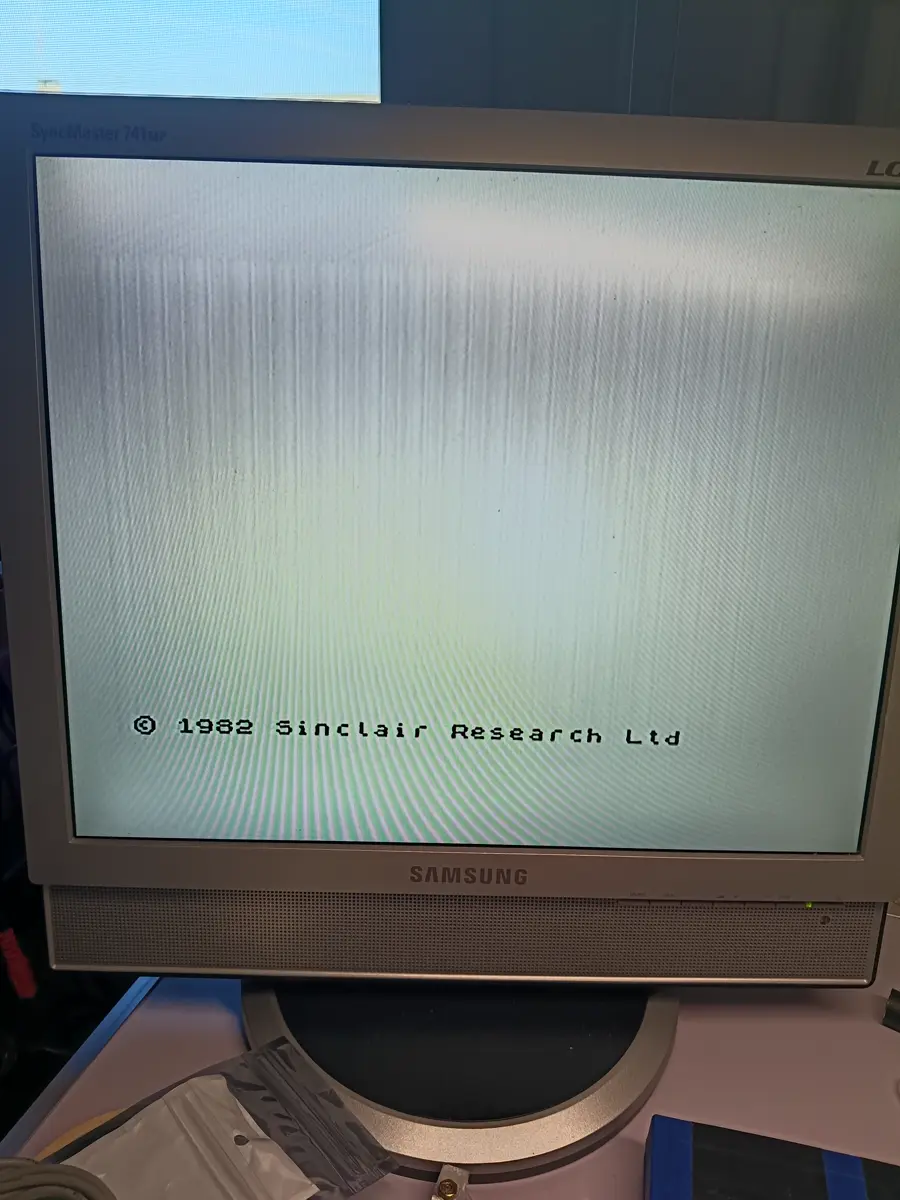 The CPU was indeed the problem.
Now everything works perfectly, and the border turns white after the boot phase.
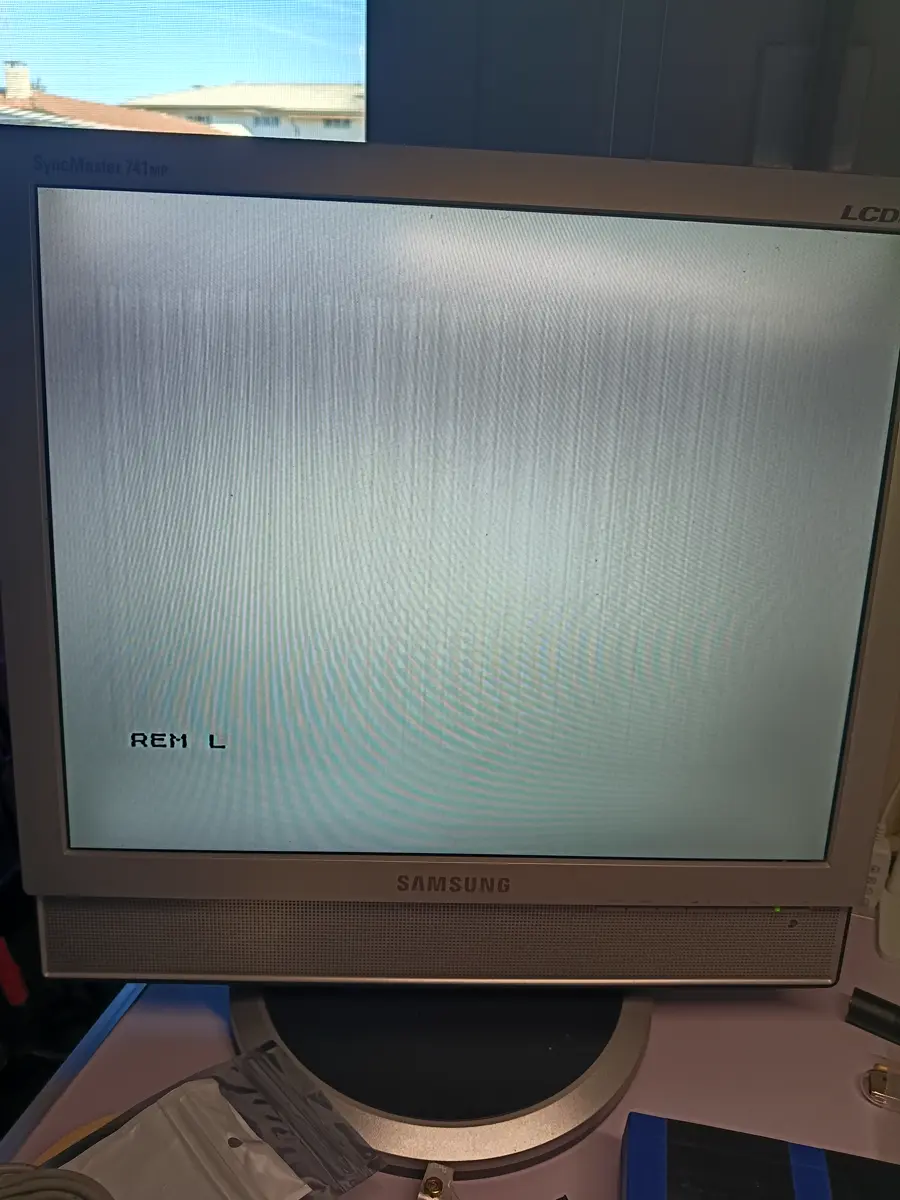 The keyboard responds to commands!
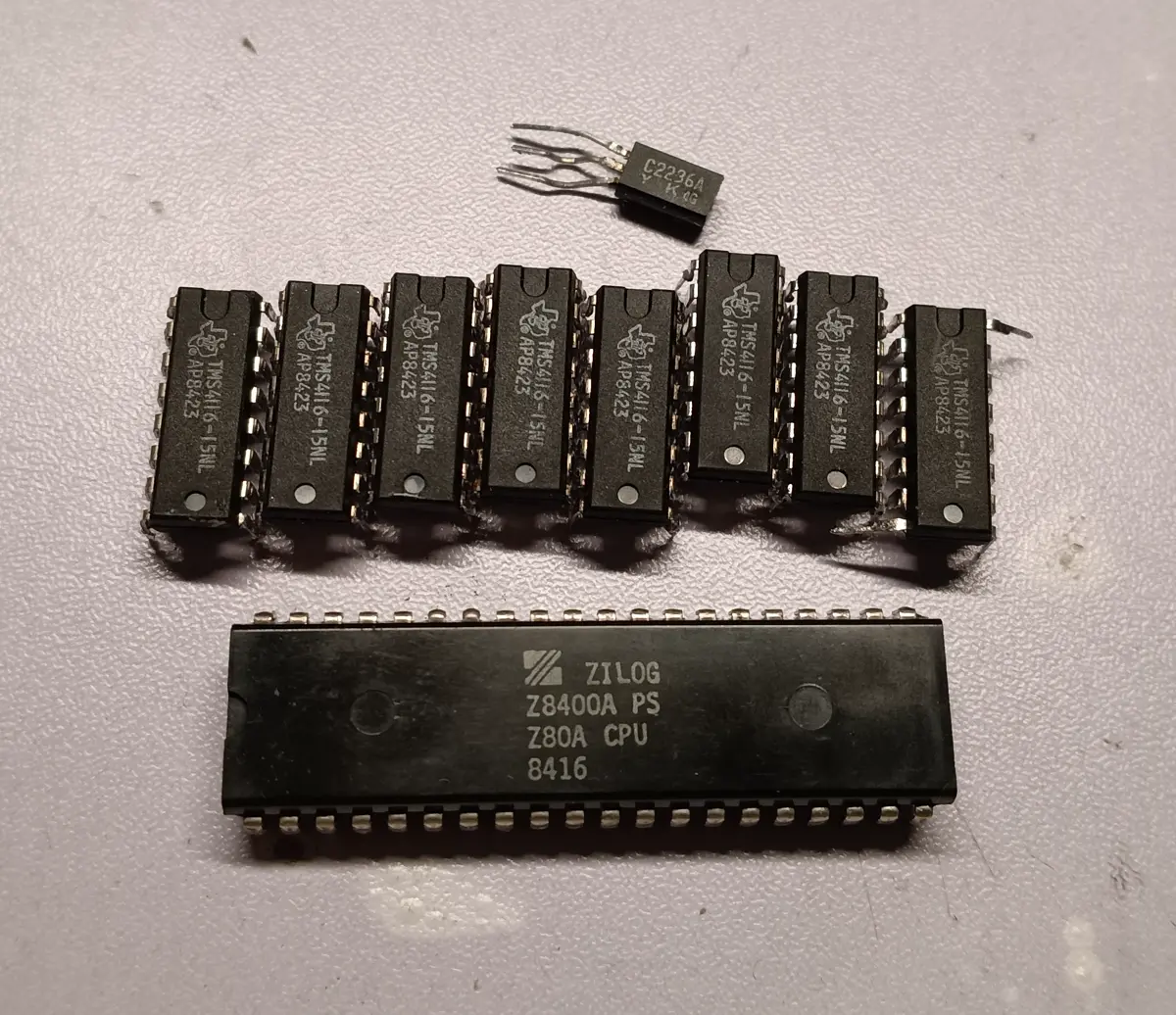 The spoils of war.
I also checked all the electrolytic capacitors by measuring their values and ESR; to test them directly onboard, I unsoldered one terminal and used the classic TC1 MultiFunction Tester.
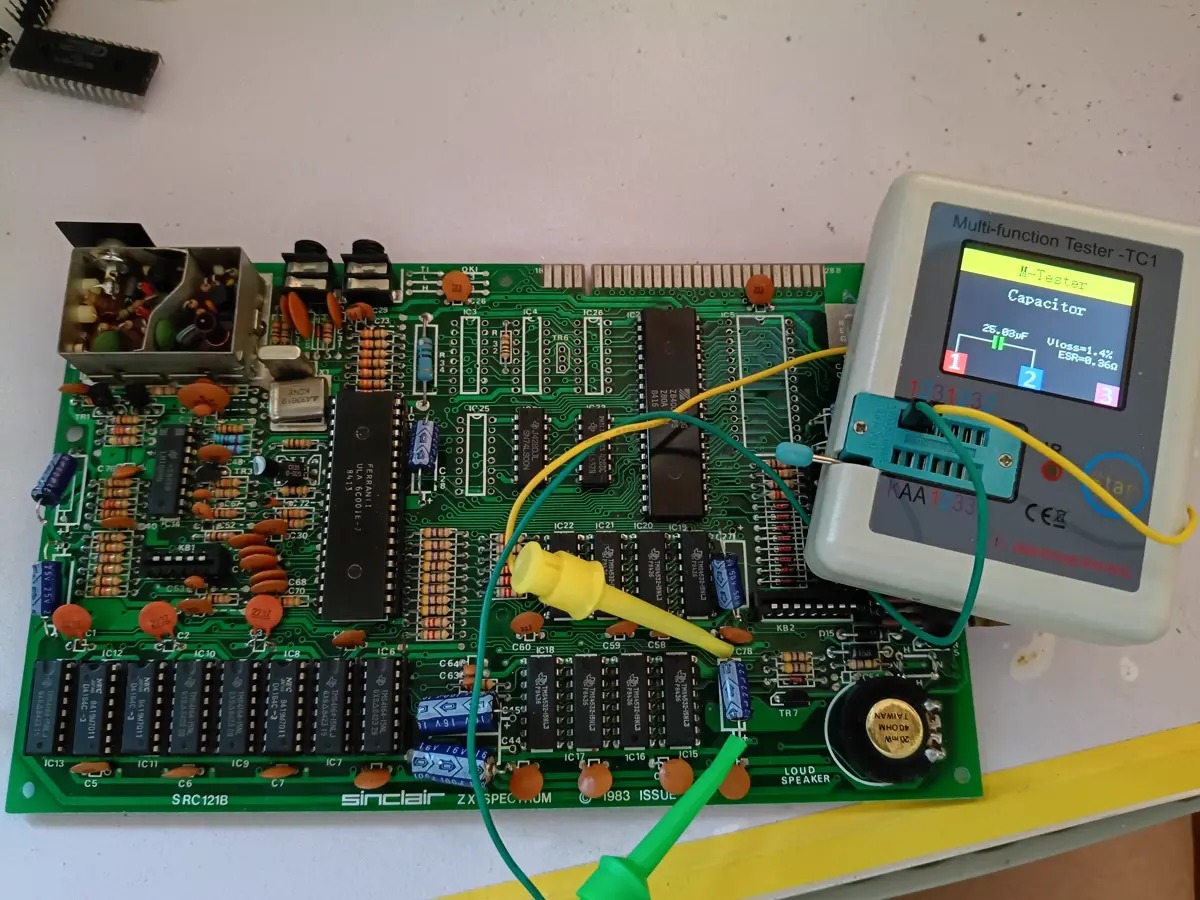 Incredibly, they all turned out to be perfect; recapping the board was unnecessary.
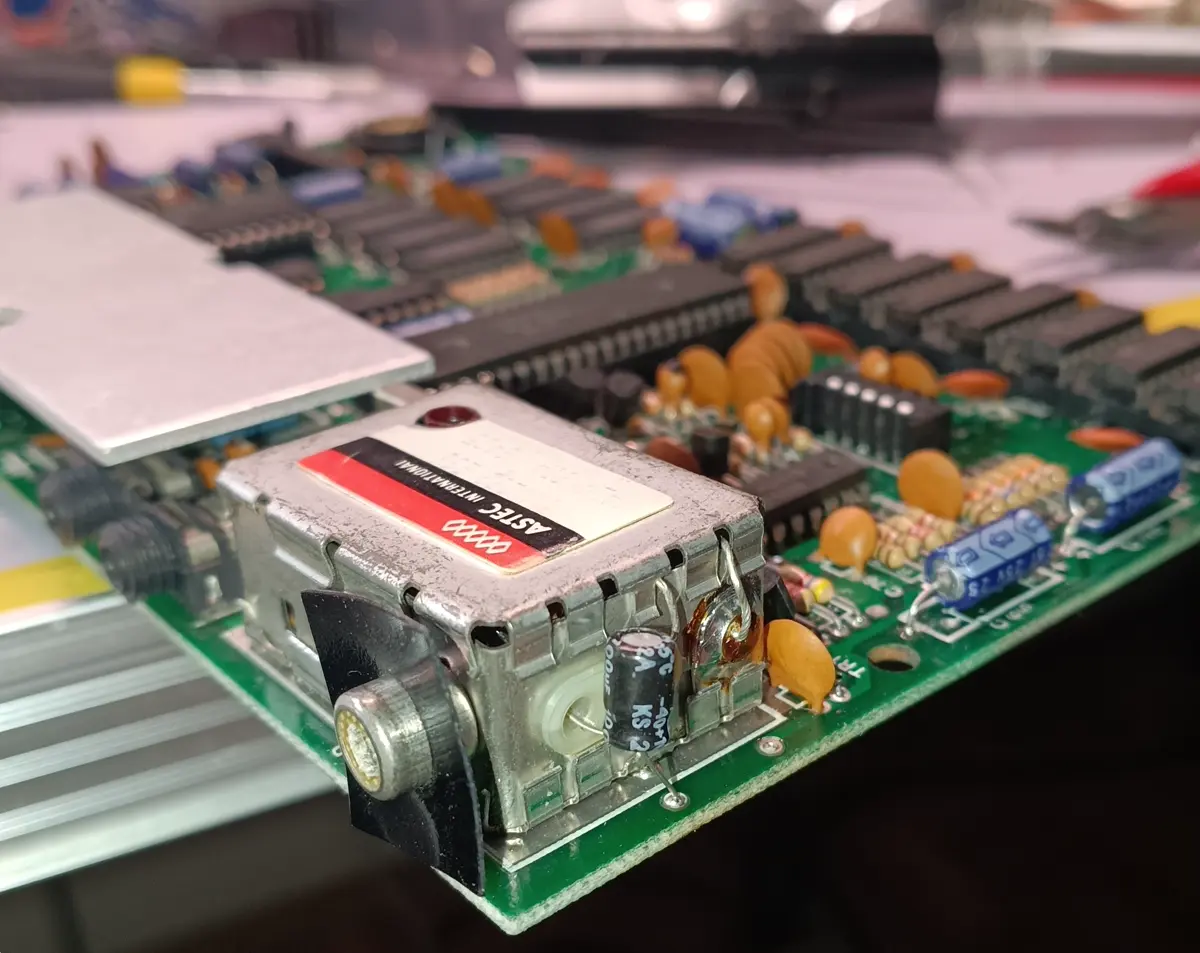 I modified the video output to composite; I'll spare you the details, it's the modification described on many other sites that involves bypassing the RF modulator and adding a 100 uF capacitor.
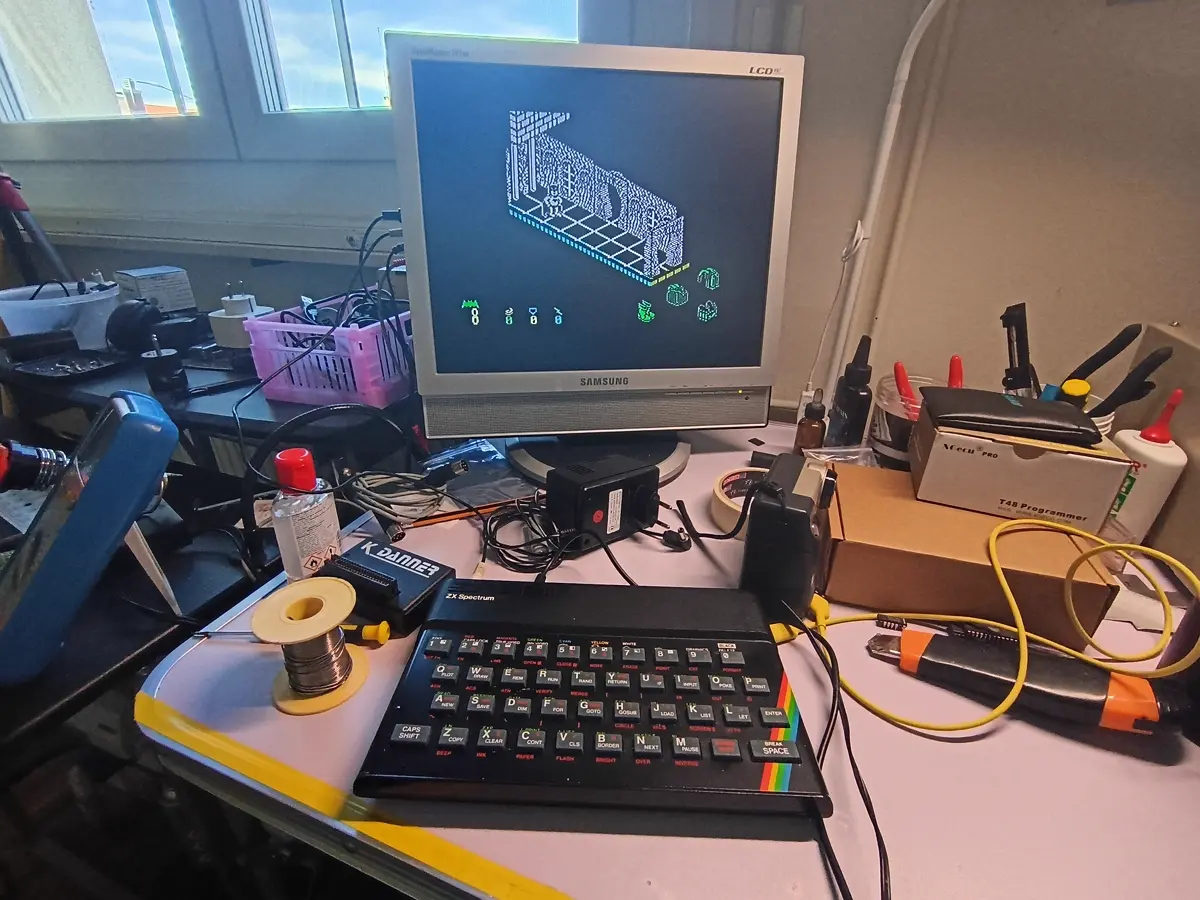
I tried running a game and it works perfectly. This is Batman and it should only work on the 48k Spectrum. This means the upper RAM should be working correctly.
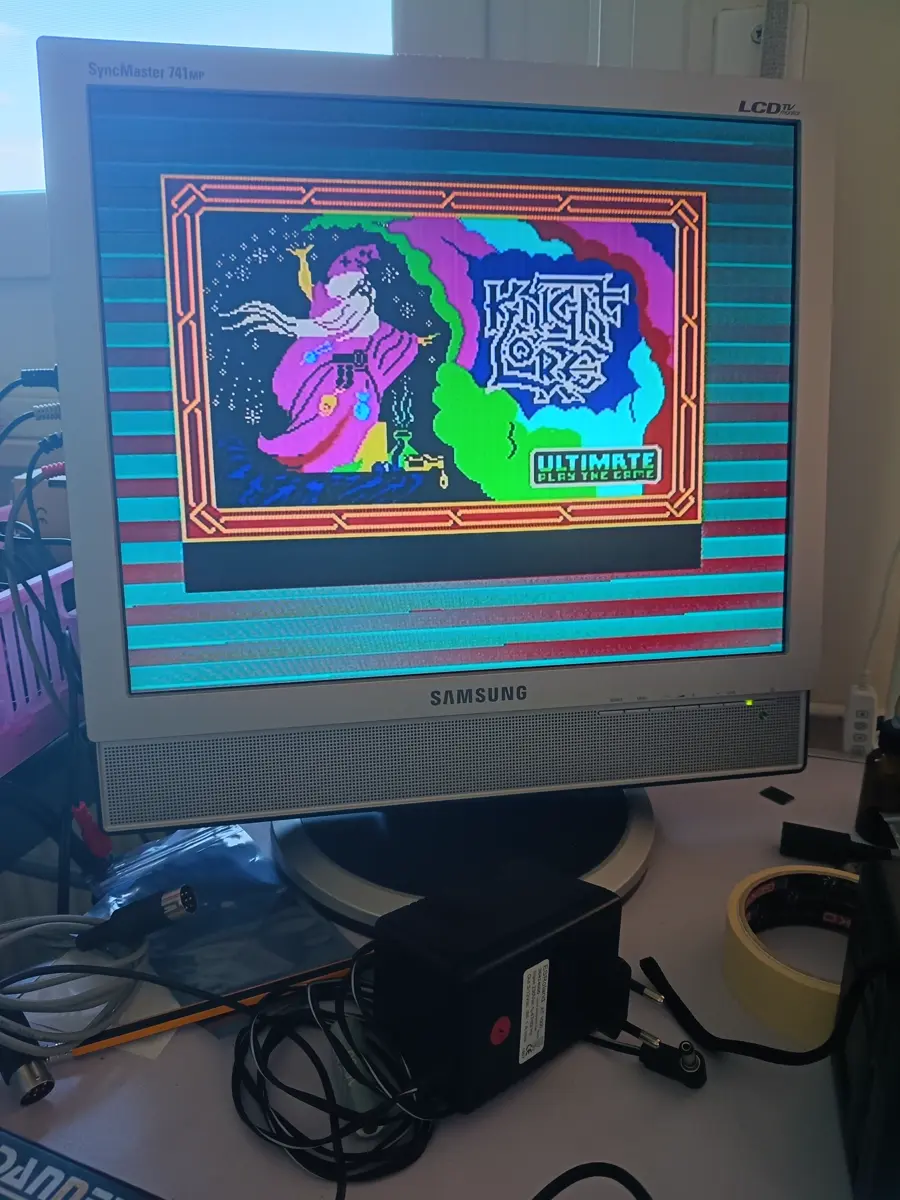 Knight Lore. Spectrum game bootloaders are truly hypnotic.
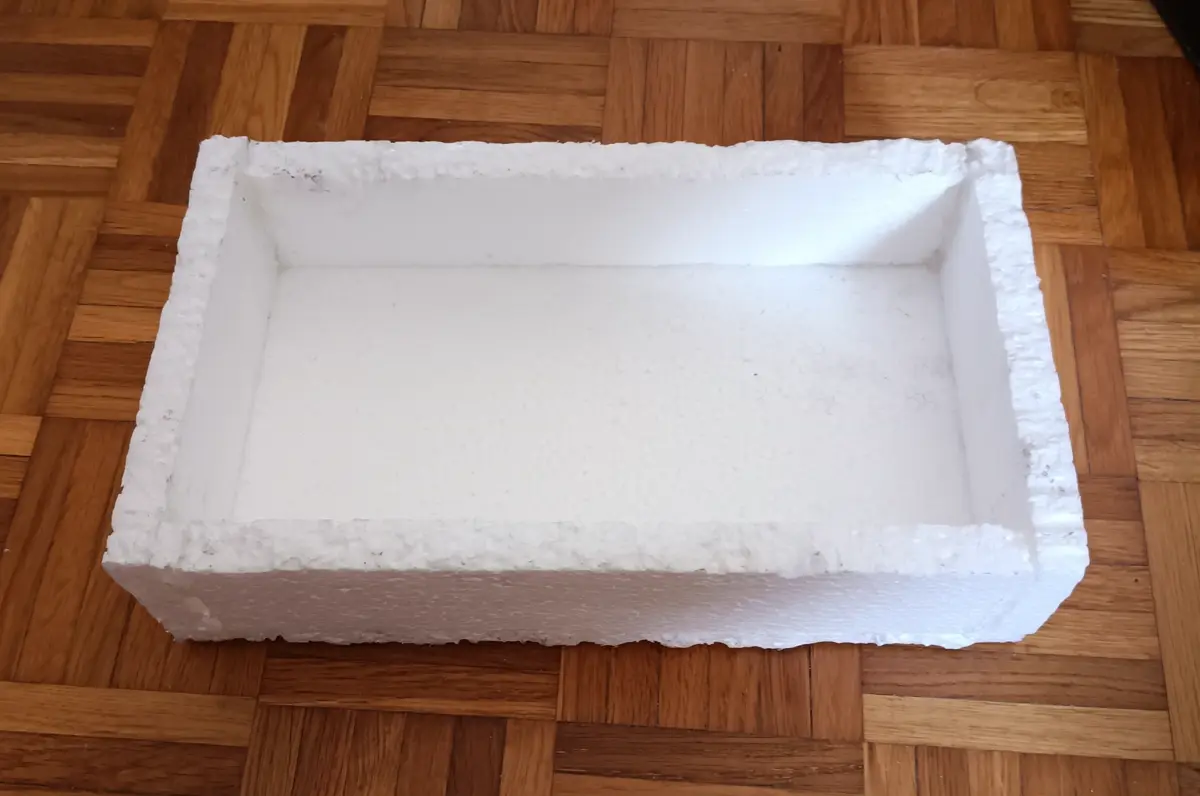
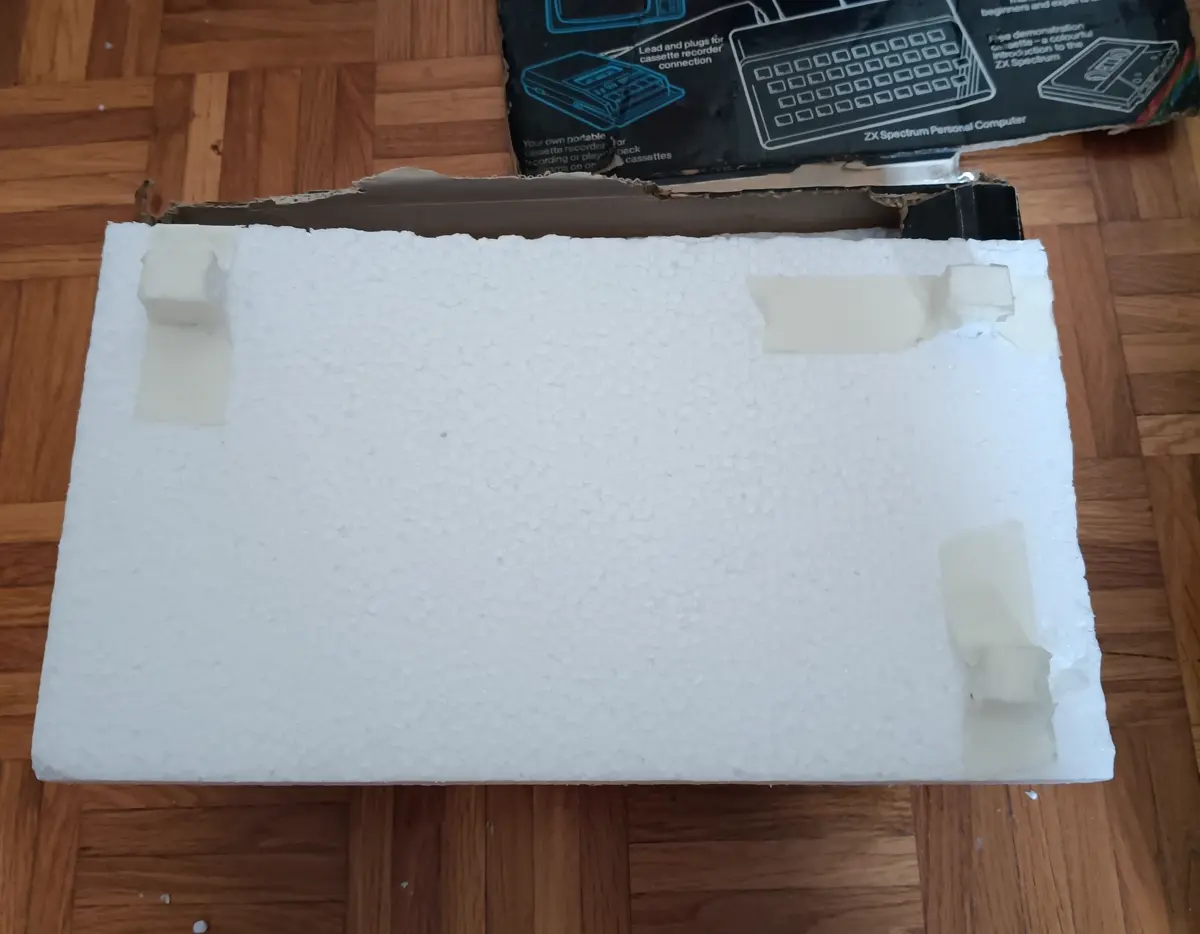
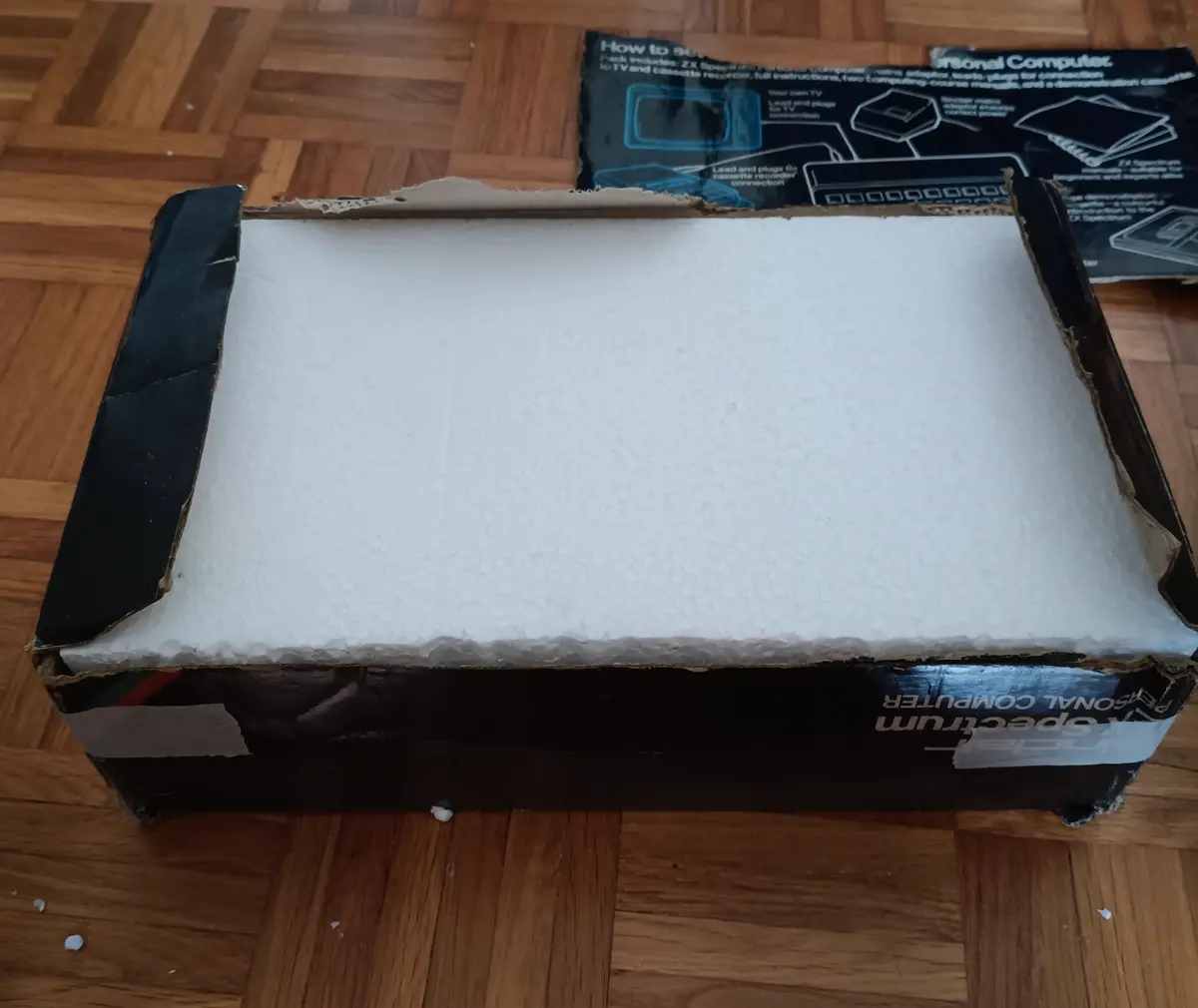
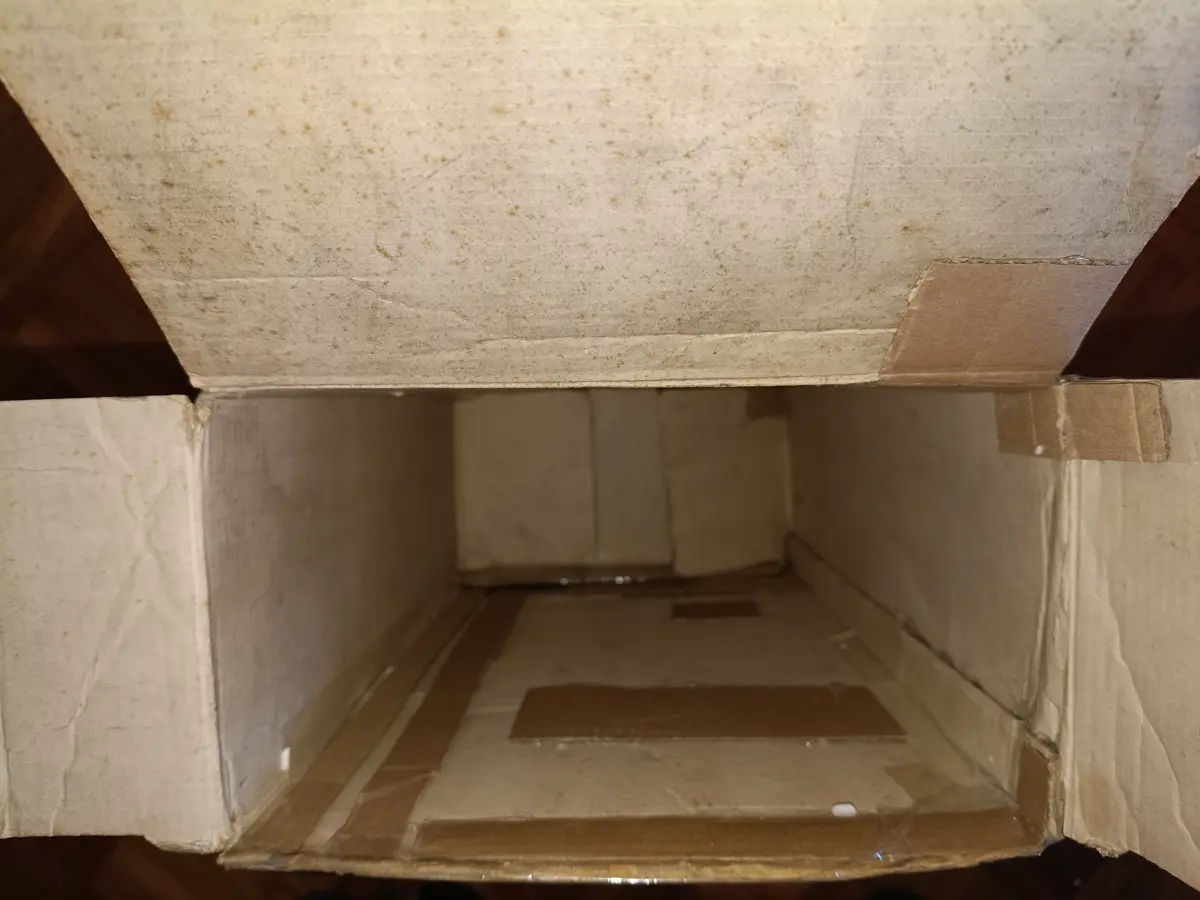
The box was in rough shape, but I managed to restore it by gluing the torn parts and reinforcing it from the inside with glued strips of cardboard; I also made the internal packaging out of polystyrene, a very relaxing little DIY project.
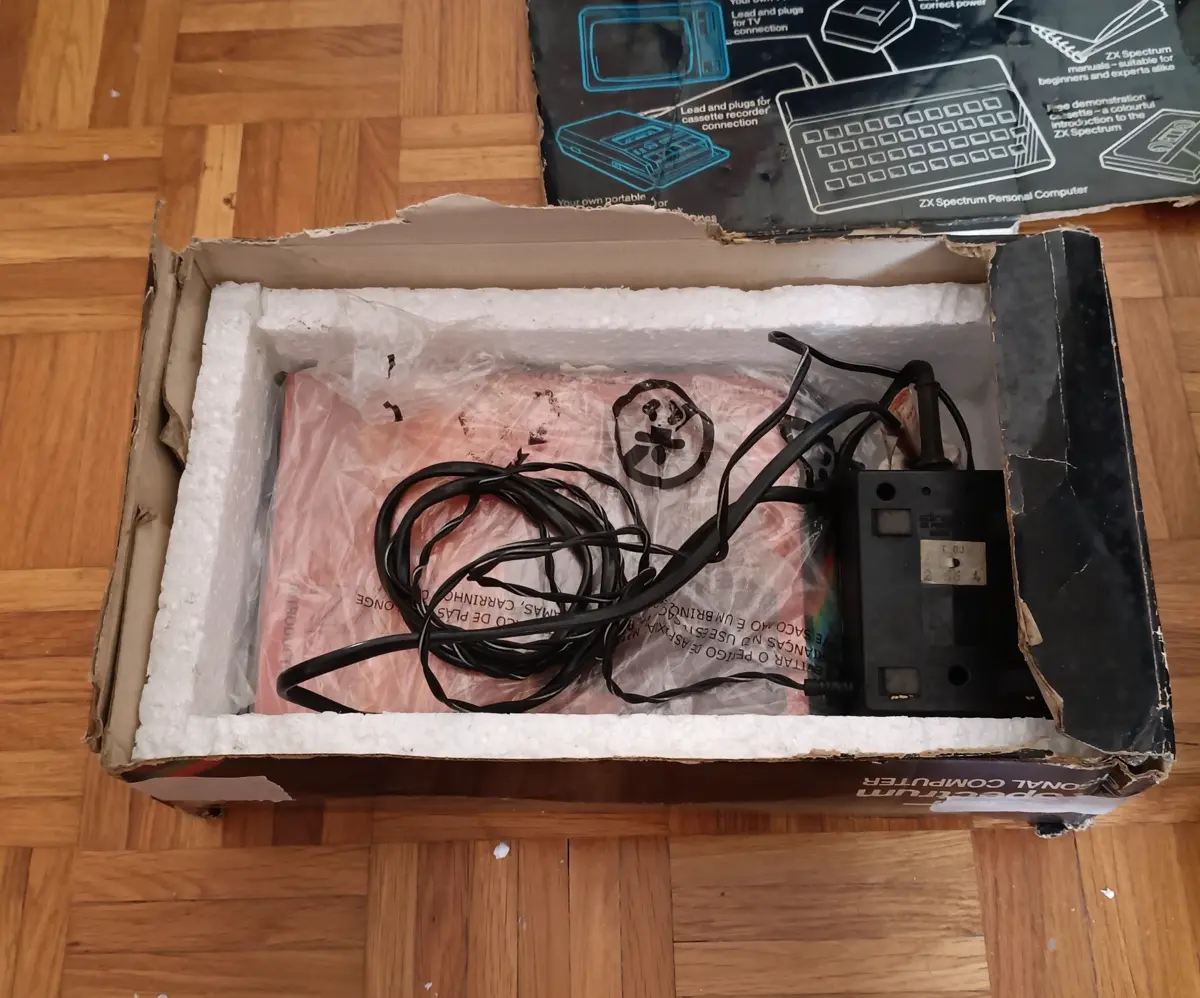
So far I've done all the tests using a power supply from another Spectrum, because the power supply provided with this one was actually broken.
This article is already long enough; I'll cover the power supply repair in a separate post.
It has been submitted and will be reviewed before being published.